10 Ways to Use Conversation Cards With Students
Sometimes the hardest part of a counseling session isn’t knowing what to talk about.
It’s getting the conversation started.
You ask, “How are things going?”
“Fine.”
“Anything you want to talk about?”
“Nope.”
And then… silence.
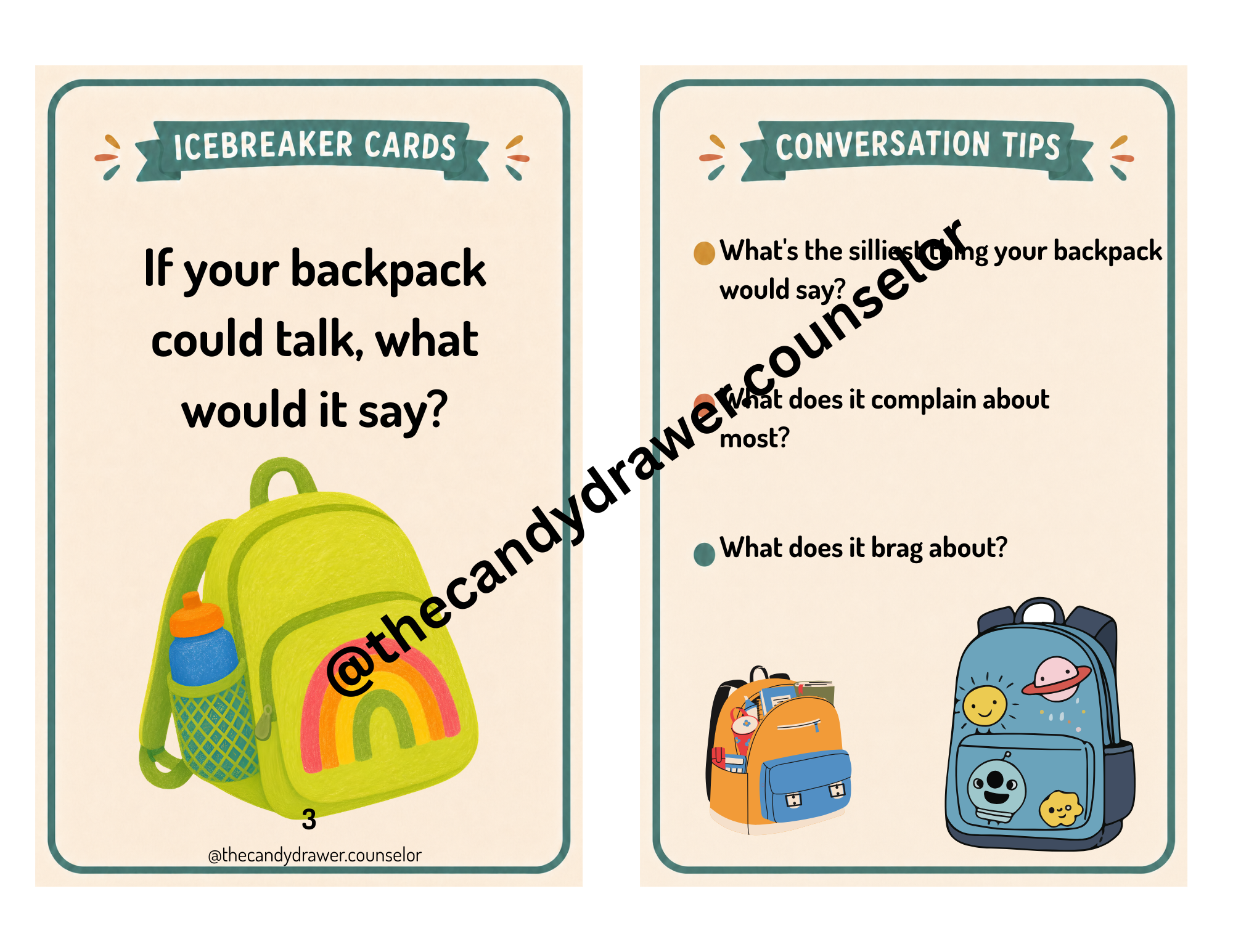
That’s exactly why I love conversation cards. They take some of the pressure off students and give you an easy place to start. Grab the Conversation Cards here.
They take some of the pressure off students. Instead of feeling like they’re being questioned by an adult, they have something concrete to focus on. A card can turn an awkward silence into a funny story, an unexpected connection, or sometimes a much deeper conversation.
And conversation cards don’t have to be reserved for individual counseling. Here are 10 ways to use them with students throughout the school year.
1. Start Individual Counseling Sessions
Instead of beginning every session with, “So, what do you want to talk about today?” let the student choose a card.
It gives you somewhere to start without immediately asking them to talk about what’s wrong.
Sometimes the answer stays light.
Sometimes it opens a completely unexpected door.
Either way, you’re talking.
2. Use Them With Students Who Don’t Like Direct Questions
Some students shut down the second they feel like they’re being interviewed.
Conversation cards can change the dynamic.
The card is asking the question—not you.
That little bit of separation can make talking feel safer, especially for students who need time to warm up before discussing anything personal.
3. Break the Ice in Small Groups
The first small-group session can be awkward.
Everyone is looking around wondering:
Do I have to talk?
Who are these people?
Why am I here?
Put the cards in the middle and let everyone choose one.
Keep the first few questions light and fun. You’re not trying to create a breakthrough on day one.
You’re helping students become comfortable enough to come back for day two.
4. Let Students Ask You a Question Too
Trust goes both ways.
Occasionally, let students choose a card for you to answer.
Obviously, keep your response appropriate and within professional boundaries, but sharing something simple—your favorite snack, something you liked as a kid, or what makes you laugh—helps students see the person behind the counselor title.
And they usually love getting to turn the questions around on you.
5. Put a “Question of the Week” in Your Office
Choose one conversation card each week and display it somewhere students can see it.
It might say:
What’s something you’re really good at?
Students can answer when they stop by, write their response on a sticky note, or simply use it as a conversation starter.
It gives regular visitors something new to talk about without you having to manufacture a conversation every time they walk in.
6. Keep Them on Your Desk for Drop-In Visits
Not every student visit needs to become a formal counseling session.
Sometimes a student stops by for candy.
Or to avoid going back to class for another two minutes.
Or because they “just wanted to say hi.”
Those little visits matter.
Keep your conversation cards somewhere accessible and occasionally pull one out.
A two-minute conversation can become another tiny deposit in that student’s trust bank.
7. Use Them During Lunch Groups
Lunch groups naturally lend themselves to conversation cards because students are already sitting together doing something familiar.
Put a stack in the middle of the table and take turns choosing.
The goal doesn’t have to be deep conversation.
Laugh.
Tell stories.
Discover shared interests.
Let students realize they have more in common than they thought.
Relationship-building is the activity.
8. Pair Them With Fidgets
For students who have a hard time sitting face-to-face and talking, add a fidget.
Let them squeeze something, stretch something, or keep their hands moving while you work through a few cards.
There’s something about taking the pressure off eye contact and giving busy hands a job that can make conversation feel much less intimidating.
Sometimes talking is easier when talking isn’t the only thing happening.
9. Use the Follow-Up Questions
The first question is only the beginning.
If a student gives you an interesting answer, don’t immediately grab another card.
Stay there.
“Tell me more about that.”
“Why did you choose that?”
“Has that always been your favorite?”
“Who do you usually do that with?”
The magic isn’t in getting through as many cards as possible.
The magic is in what happens after the first answer.
10. Let the Conversation Go Somewhere Else
This might be the most important one.
You pull a card.
The student answers.
Their answer reminds them of something else.
That turns into a story.
The story turns into something that happened at lunch.
And suddenly you’re talking about the friendship problem they’ve been carrying around for three weeks.
Let the cards do their job—and then put them down.
The goal was never to finish the deck.
The goal was to open the door.
Conversation Cards Aren’t Really About the Questions
A deck of cards isn’t going to magically make every student open up.
That’s not the point.
They’re simply a tool that makes the beginning a little easier.
They give students something to hold.
Something to think about.
Something to laugh about.
And sometimes, something that helps them find the words they weren’t quite sure how to say.
Because just like the candy drawer, the fidgets, and all those other little things in our counseling offices…
The tool isn’t the magic.
It’s the invitation.
The relationship you build after that is what really matters. 🍬
Ready to try conversation cards with your students?
My Conversation Cards were created to make those first few minutes easier and help you move from awkward silence to genuine connection. Take a look at the Conversation Cards here.


Leave a Reply